Termite Treatment Cost in Atlanta (2026)
A liquid termite barrier on a Georgia home typically costs about $300 to $1,200 (Fixr's Georgia figure for a 2,500 sq ft house, average $525), and larger or harder homes can exceed $2,000. Bait systems typically cost $1,000 to $2,500 to install plus about $200 to $400 a year, and termite bond renewals run about $150 to $500 a year.
Termite treatment for a typical metro Atlanta home usually costs about $300 to $1,200 for a liquid soil barrier, the most common subterranean termite treatment. That range is Fixr's Georgia-specific figure for a 2,500 sq ft house (average $525). Larger homes, crawlspaces, slabs that need drilling, or heavy activity can push a whole-house job past $2,000. Bait systems are priced differently: about $1,000 to $2,500 to install, plus an annual monitoring plan.
The price you're quoted is rarely just the treatment. Most Georgia termite work is sold with a written contract, often called a termite bond, that sets the warranty (retreatment only, or retreatment and repair), the annual renewal fee and how often the company comes back. UGA Extension notes that many companies sell 5-year contracts renewed annually. Compare the first-year cost and the renewal together.
Subterranean termites are the main termite problem across the Southeast, and the eastern subterranean termite is the most common species (UGA Extension). Use the termite treatment cost calculator below for a range sized to your home, then the termite bond checker to see what a contract should cover before you sign. Atlanta Pest Guide is an independent guide and referral service published by Cornelia Cove LLC; quotes come from the independent companies you choose to hear from.
Typical national range
$300 – $2,000
Liquid barrier, whole house: about $300–$2,000 across published guides; about $300–$1,200 for a typical Georgia home (Fixr); larger or harder homes can exceed $2,000
Termite treatment cost by treatment type
| Item | Typical range | Notes |
|---|---|---|
| Liquid barrier, per linear foot | $3 – $16 | Very consistent across sources: Fixr Georgia $3.05–$16.15; HomeGuide $3–$20 |
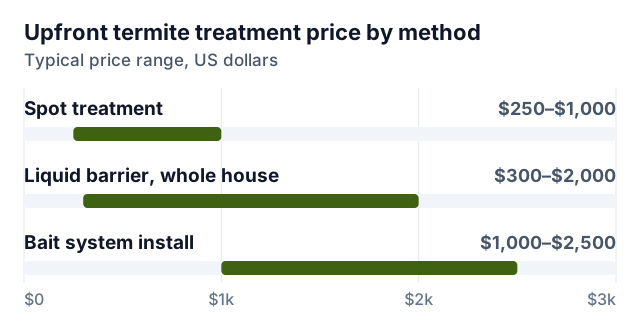
| Liquid barrier, whole house | $300 – $2,000 | Typical Georgia home about $300–$1,200 (Fixr Georgia, 2,500 sq ft, avg $525); the $2,000 top comes from HomeGuide and Fixr's national figures, and larger or harder homes can exceed it |
| Spot or localized treatment | $250 – $1,000 | This Old House; Fixr Georgia puts a small job at about $240 |
| Bait system installation | $1,000 – $2,500 | HomeGuide. Installs typically run about $8–$12 per linear foot nationally. This Old House gives a wider $400–$3,000 |
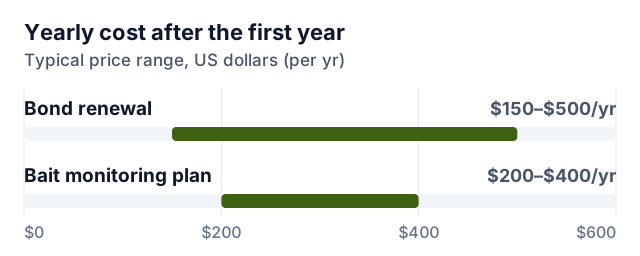
| Bait annual monitoring / plan (per year) | $200 – $400 | Labelled as an annual plan: only HomeGuide prices bait monitoring directly |
| Termite bond / contract, first year | $500 – $2,000 | Fixr Georgia, This Old House, HomeGuide (up to $2,500) |
| Termite bond annual renewal / plan (per year) | $150 – $500 | HomeGuide renewal $150–$500; Fixr Georgia annual visit $180–$420 |
What changes the price
Providers quote their own work — these are the factors that consistently move the number.
- Treatment type. A liquid barrier is usually priced by the linear foot of foundation (about $3–$16 per foot), while a bait system typically costs $1,000–$2,500 to install and carries a yearly monitoring fee.
- Size and shape of the foundation. More linear feet means more trenching and more termiticide, which is why a large or irregular home can cost more than about $2,000 for a liquid job.
- Construction details. Slabs that need drilling, crawlspaces with poor access, wood touching soil, and additions or porches built at different times all add labor. Georgia's minimum soil-treatment rules call for debris removal, a 6-inch trench and wood-to-soil clearance, and deviations need an owner-signed Official Waiver (GDA rules).
- How much activity there is. A single area of activity may be handled with a spot treatment (about $250–$1,000), while active infestation in several places usually calls for a full treatment. Georgia rules require a complete retreatment after three or more separate active infestations within 5 years under a contract.
- The contract you buy with it. A 'retreatment and repair' warranty typically costs more than 'retreatment only'. Renewal fees commonly run about $150–$500 a year, so a cheap first year can still be expensive over a 5-year term.
- Company pricing and inclusions. Some quotes bundle the first-year bond and an annual inspection; others price them separately. Ask for the treatment, the warranty and the renewal fee in writing so quotes compare like for like.
Liquid barrier vs bait system cost
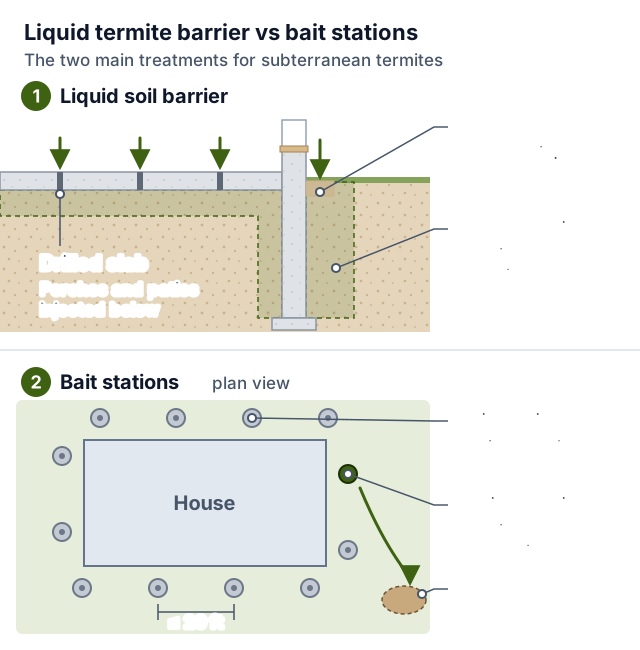
A liquid barrier is usually the cheaper upfront choice: about $300–$1,200 for a Georgia home in Fixr's estimate, more for large or complex foundations. A bait system typically costs about $1,000–$2,500 to install (HomeGuide; This Old House gives a wider $400–$3,000), plus an annual monitoring plan of about $200–$400.
Georgia rules treat baits as a system that has to be maintained. The contract must carry a boxed warning that removing the bait system may leave the home unprotected, and the company must keep station-by-station monitoring records (GDA rules and Notice 24-01). If you stop paying for monitoring, expect protection to lapse.
Termite bond cost and renewal in Georgia
A termite bond is the written contract that comes with treatment. The first year typically runs about $500–$2,000 including treatment, and renewals commonly cost about $150–$500 a year. Only HomeGuide calls its figure a 'renewal'; Fixr's Georgia page gives $180–$420 for an annual visit, so treat the range as an annual renewal or plan.
Georgia's rules say what the written contract must show: the treatment type, the term, a diagram of the structure, the price, a boxed statement saying whether the warranty is 'retreatment only' or 'retreatment and repair', the renewal fee and how many years it is fixed, and how often the company reinspects. You sign before work starts, and the contract must disclose your 3-day right to cancel. If an annual inspection isn't included, UGA Extension suggests asking for it in writing. The termite bond checker walks through these terms.
Frequently Asked Questions
How much does termite treatment cost in Atlanta?
For a liquid barrier, typically about $300–$1,200 on a Georgia home (Fixr, 2,500 sq ft, average $525). Larger or harder homes can exceed $2,000. Bait systems typically cost $1,000–$2,500 to install plus about $200–$400 a year.
Is a bait system or a liquid treatment cheaper?
Liquid is usually cheaper upfront. Bait typically costs more to install and needs an annual monitoring plan, so compare at least 5 years of renewals before deciding. Ask each company which method it recommends for your foundation and why.
How much does it cost to renew a termite bond?
Typically about $150–$500 a year (HomeGuide; Fixr's Georgia page lists $180–$420 for an annual visit). Georgia rules require the contract to state the renewal fee and how many years it is fixed, so check that number before you sign.
Can I get a spot treatment instead of treating the whole house?
Sometimes. Spot or localized treatments typically cost $250–$1,000 (This Old House). They suit a small, confined area of activity. Georgia rules require a complete retreatment after three or more separate active infestations within 5 years under a contract, so a company may recommend the full job.
Who is allowed to treat termites in Georgia?
A licensed structural pest control company with a certified operator in Category 30, Wood-Destroying Organisms. You can look the company up on the Georgia Department of Agriculture's license search before you sign. Homeowners may treat their own property, but must follow the product label.
Estimates only — independent local providers quote their own pricing. Data last reviewed 2026-10.
Sources
- Fixr: Termite Treatment Cost in Georgia (Jan 31, 2025) (third-party estimate)
- HomeGuide: Termite Treatment Cost (Nov 21, 2025) (third-party estimate)
- This Old House: Termite Treatment Cost (Jun 17, 2026) (third-party estimate)
- Fixr: Termite Exterminator Cost (national) (third-party estimate)
- Rules of the Georgia Structural Pest Control Commission (effective April 8, 2026)
- Georgia Dept. of Agriculture: Notice 24-01, Termite Baiting
- UGA Extension B1241: Termite Control Services, Information for the Georgia Property Owner
Related services
Free tools for this job
Termite Bond Checker: Is My Termite Bond Worth It?
Answer questions about your termite contract to see what it covers, whether it meets Georgia's contract rules, and what to do if it doesn't.
Use the free tool →Termite or Flying Ant? Swarmer Identification Check
Found winged insects inside? Compare antennae, wings and waist, plus where and when they swarmed, to see whether they look more like termites or flying ants.
Use the free tool →Prefer to just talk to someone?
Send the short form — we'll route you to an independent local pro.