Termite Inspection & Georgia Termite Letter Cost (2026)
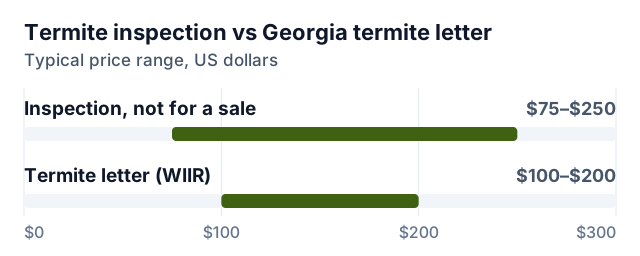
A termite inspection in Georgia typically costs about $75 to $250, and many companies inspect for free when it isn't tied to a sale. The Georgia termite letter, the Official Georgia Wood Infestation Inspection Report (WIIR), typically costs about $100 to $200 (Fixr's Georgia figure), though some companies charge more.
A termite inspection typically costs about $75 to $250 in Georgia, and many companies inspect for free when you're not buying or selling. Fixr's Georgia page puts most inspections at $75 to $150; HomeGuide's range runs from free to $250.
If the inspection is for a home sale, you're usually paying for the termite letter: the Official Georgia Wood Infestation Inspection Report, or WIIR. It typically costs about $100 to $200, though some companies charge more. It's often requested at closing, and only a company with a Georgia Wood-Destroying Organism (Category 30) certified operator can issue it.
This guide covers both prices, what the letter does and doesn't cover, and the 90-day rule that comes with it. Atlanta Pest Guide is an independent guide and referral service published by Cornelia Cove LLC; it doesn't inspect homes, and the companies you hear from set their own prices.
Typical national range
$75 – $250
Inspection not tied to a sale; many companies inspect free. GA termite letter typically $100–$200
Termite inspection and bond cost in Georgia
| Item | Typical range | Notes |
|---|---|---|
| Termite inspection (not for a sale) | $75 – $250 | Many companies inspect free. Fixr Georgia $75–$150; HomeGuide $0–$250 |
| Georgia termite letter (WIIR) | $100 – $200 | Typical, per Fixr's Georgia page. Some companies charge more: HomeGuide gives $100–$325 |
| Spot treatment if activity is found | $250 – $1,000 | This Old House; Fixr Georgia small job about $240 |
| Termite bond / contract, first year | $500 – $2,000 | If the letter leads to treatment or a new contract |
| Termite bond annual renewal / plan (per year) | $150 – $500 | HomeGuide renewal; Fixr Georgia annual visit $180–$420 |
What changes the price
Providers quote their own work — these are the factors that consistently move the number.
- Why you need it. A routine inspection is often free or low cost; a WIIR for a sale typically costs about $100–$200 because the company is issuing an official report with a 90-day obligation attached.
- Size and access. Larger homes, crawlspaces and areas that are hard to reach take longer. The WIIR has to list obstructed or inaccessible areas, so access affects what the report can say.
- Existing contract. If the home already has an active termite contract, the company holding it may issue the letter as part of that service. The WIIR must disclose the contract's expiration date and whether the warranty transfers, and at what fee.
- Turnaround for closing. Some companies price a rushed report differently. Ask for the price and timing in writing when you book.
- What's found. If the inspection finds activity, treatment is a separate cost: spot treatments typically run $250–$1,000, and a full liquid barrier on a Georgia home typically costs about $300–$1,200.
What the Georgia termite letter (WIIR) covers
The Official Georgia Wood Infestation Inspection Report is the official document certifying that a structure is 'apparently free' of wood-destroying organisms, as a basis for transferring property. It is the only form accepted for Georgia transfers; the national NPMA form isn't accepted. A WDO-certified or WDO-registered technician may do the inspection, and the company's WDO certified operator signs it (GDA WIIR fact sheet; Structural Pest Control Commission rules).
The report must disclose past treatments by the issuing company, the termite contract's expiration date, whether the warranty transfers and at what fee, any Official Waiver, and areas that were obstructed or inaccessible.
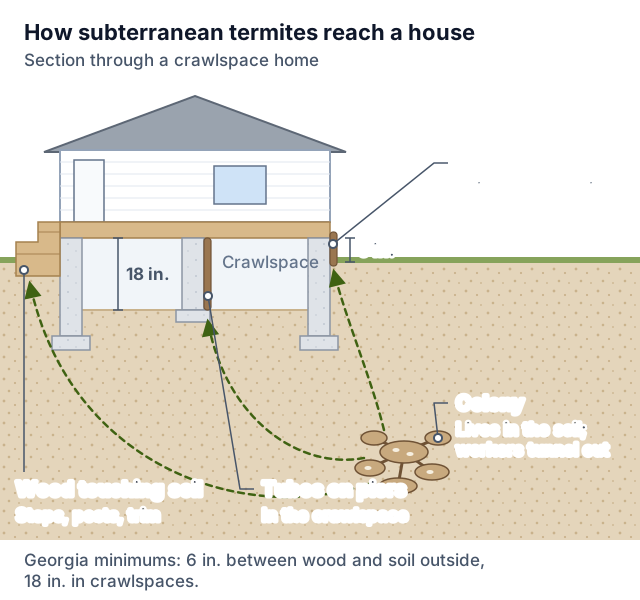
What the termite letter does not cover
A WIIR is not a structural report and not a warranty that termites are absent. It covers only five wood-destroying organisms and only readily accessible areas, and it excludes mold. If damage is noted, Georgia's form says it should be evaluated by a building-trade inspector.
It's often requested at closing, but the rules describe it only as a basis for transfer, so ask your lender or agent what your contract requires rather than assuming it's mandatory.
The 90-day rule after a termite letter
If an infestation is found within 90 days of the letter's issue, the issuing company must treat it free of charge, and that term can't be altered. Conducive conditions that existed at the inspection but weren't reported must also be corrected free within 90 days. The Georgia Department of Agriculture may inspect a WIIR within 2 years of issue.
Frequently Asked Questions
How much is a termite letter in Georgia?
Typically about $100–$200 (Fixr's Georgia page names the report at this price). Some companies charge more: HomeGuide's range reaches $325. Ask for the price and turnaround time when you book.
Is a termite inspection free?
Often, when it isn't for a sale. Many companies inspect for free and quote treatment. Paid inspections typically cost $75–$250. A WIIR for a closing is usually a paid report.
Is a termite letter required to sell a house in Georgia?
It's often requested at closing, but the Georgia rules describe the WIIR as a basis for transferring property rather than a universal requirement. Your purchase contract or lender sets whether you need one.
Who can issue a Georgia termite letter?
Only a company with a Wood-Destroying Organism (Category 30) certified operator. A WDO-certified or registered technician may inspect, and the company's certified operator signs. You can check the company on the Georgia Department of Agriculture's license search.
What happens if termites are found after the letter?
If an infestation is found within 90 days of issue, the company that issued the letter must treat it free, and that can't be changed by contract. Unreported conducive conditions that existed at the inspection must also be corrected free within 90 days.
Estimates only — independent local providers quote their own pricing. Data last reviewed 2026-10.
Sources
- Fixr: Termite Treatment Cost in Georgia (Jan 31, 2025) (third-party estimate)
- HomeGuide: Termite Inspection Cost (Nov 22, 2025) (third-party estimate)
- This Old House: Termite Treatment Cost (Jun 17, 2026) (third-party estimate)
- Georgia Dept. of Agriculture: Official Georgia Wood Infestation Inspection Report fact sheet (rev. Apr 14, 2026)
- Rules of the Georgia Structural Pest Control Commission (effective April 8, 2026)
- Georgia Dept. of Agriculture: Structural Pest Control license search
Related services
Free tools for this job
Termite Bond Checker: Is My Termite Bond Worth It?
Answer questions about your termite contract to see what it covers, whether it meets Georgia's contract rules, and what to do if it doesn't.
Use the free tool →Termite Treatment Cost Calculator
Estimate liquid barrier, bait system or spot treatment cost from your home's perimeter and foundation, plus the yearly renewal, using published Georgia and national ranges.
Use the free tool →Prefer to just talk to someone?
Send the short form — we'll route you to an independent local pro.